Phytochemical and Antibacterial Evaluation of Pterygota Alata Leaf Extracts Against CSOM Bacteria
Keywords:
Pterygota alata, Aqueous leaf extracts, CSOM causing bacteria, Antibacterial efficacy, Phytocomeical analysisAbstract
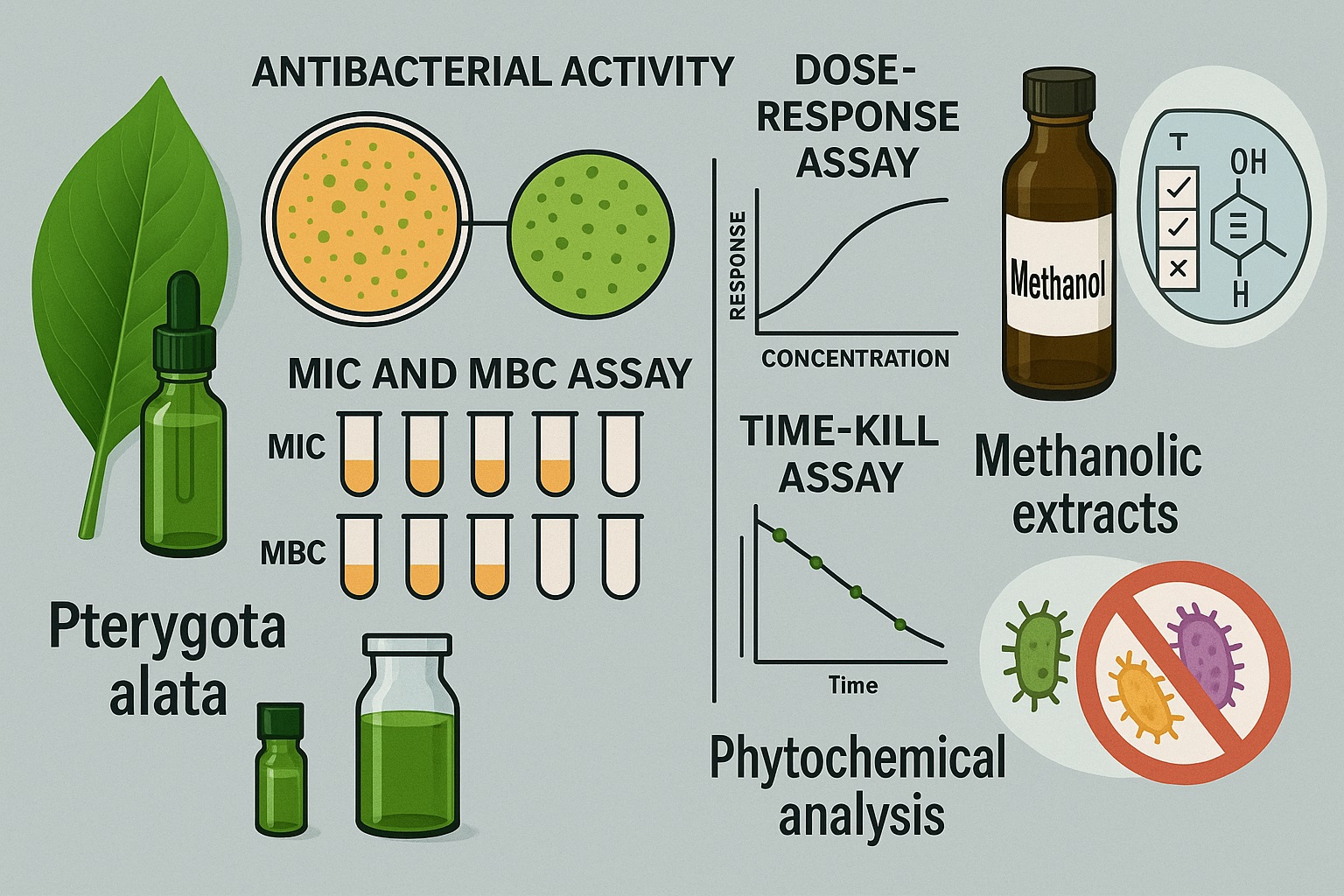
The increasing rates of multidrug-resistant (MDR) organisms among patients with chronic suppurative otitis media (CSOM) have caused treatment procedures to become more complex, raising healthcare costs and significantly increasing the time of recovery. Since medicinal plants are the natural repositories for bio-active and secondary metabolites, they are an excellent alternative to antibiotics to combat MDR bacterial strains. This study aims to assess the antibacterial activity and the presence of phytochemicals in the aqueous and methanol leaf extracts of the Indian deciduous tree Pterygota alata against 5 MDR strains of CSOM-causing bacteria: Pseudomonas aeruginosa, Staphylococcus aureus, Escherichia coli, Proteus mirabilis, and Klebsiella pneumoniae. Fresh P. alata leaves were harvested, dried, and extracted with methanol and water. Qualitative and quantitative assessments demonstrated the detection of primary and secondary metabolites. The antibacterial activities were determined using the agar well diffusion method, including minimum inhibitory concentration (MIC), minimum bactericidal concentration (MBC), dose-response, and time-kill studies against CSOM bacterial isolates. Most phytochemicals, except proteins, were present in moderate to high concentrations in aqueous and methanol extracts. The methanol extracts had higher levels of phenolics (85.6 mg/g), flavonoids (42.3 mg/g), tannins (40.8 mg/g), and saponins (36.9 mg/g). Steroids were minimal in both extracts, while alkaloids were moderately present. All extracts showed significant antibacterial activity, particularly the methanol extracts against S. aureus and P. mirabilis (ANOVA, p ≤ 0.05). The effect was concentration-dependent, with rapid bactericidal action observed at higher concentrations. It was further confirmed with one-way ANOVA followed post-hoc Tukey test, there were significant differences among different treatments (p ≤ 0.05), supporting the reliability of the results. Therefore, it can be concluded from this study that methanolic leaf extracts of P. alata can be used as an alternative or complementary antibacterial agent against MDR CSOM infections.
References
[1] Khairkar, M.; Deshmukh, P.; Maity, H. and Deotale, V.; “Chronic Suppurative Otitis Media: A Comprehensive Review of Epidemiology, Pathogenesis, Microbiology, and Complications”. Cureus. 15(8): e43729, 2023.
[2] Singhsamanta, D.; Dubey, D.; Rath, S.; and Das, S.R.; “Prevalence of β-lactam-resistant Pseudomonas aeruginosa strains isolated from chronic suppurative otitis media infections: A single center survey in Eastern India”. IP Int. J. Med. Microbiol. Trop. Dis., 10(3):258–264, 2024.
[3] Rath, S.; Dubey, D.; Sahu, M.C.; Debata, N.K.; and Padhy, R.N.; “Surveillance of multidrug resistance of 6 uropathogens in a teaching hospital and in vitro control by 25 ethno-medicinal plants used by an aborigine of India”. Asian Pac. J. Trop. Biomed., 2(S2): S818–S829, 2012.
[4] Rath, S.; Padhy, R.N.; “Antibacterial efficacy of five medicinal plants against multidrug-resistant enteropathogenic bacteria infecting under-5 hospitalized children”. J. Integr. Med., 13(1):45–57, 2015.
[5] El-Sherei, M.M.; Ragheb., A.Y.; Mosharrafa, S.A.; Marzouk, M.M.; Kassem, M.E.S. and Saleh, N.A.M.; “Pterygota alata (Roxb.) R. Br.: chemical constituents, anti-hyperglycemic effect and anti-oxidative stress in alloxan induced diabetic rats”. J. Mater. Environ. Sci., 9(1):245–255, 2018.
[6] Yadav, A.; Jaiswal, P.; Nath, G. and Kumari, N.; “Antioxidant and antibacterial activities of flower and fruit of Sterculia alata”. Biosci. Biotech. Res. Commun., 13(3):1464–1470, 2020.
[7] Mishra, R.; Panda, A.K.; De Mandal, S.; Shakeel, M.; Bisht, S.S. and Khan, J.; “Natural Anti-biofilm Agents: Strategies to Control Biofilm-Forming Pathogens”. Front. Microbiol. 11:566325, 2020.
[8] Kushwaha, R.; Kumari, N.; Kumari, P. and Reddy, R.C.; “Evaluating the pharmacokinetics and bioavailability of Pterygota alata inflorescence based on HRMS study to determine the reservoirs of Ayurvedic components with an emphasis on their potential therapeutic use for diabetes mellitus”. Int. J. Ayurvedic Med., 15(S1):37–42, 2024.
[9] Appiah, B.; Amponsah, I.K.; Poudyal, A. and Mensah, M.L.K.; “Identifying strengths and weaknesses of the integration of biomedical and herbal medicine units in Ghana using the WHO Health Systems Framework: a qualitative study”. BMC Complement. Altern. Med., 18(1):286, 2018.
[10] Wang, H.; Chen, Y.; Wang, L.; Liu, Q.; Yang, S. and Wang, C.; “Advancing herbal medicine: enhancing product quality and safety through robust quality control practices”. Front. Pharmacol. 14:1265178, 2023.
[11] Dubale, S.; Kebebe, D.; Zeynudin, A.; Abdissa, N.; and Suleman, S.; “Phytochemical screening and antimicrobial activity evaluation of selected medicinal plants in Ethiopia.” J. Exp. Pharmacol. 15: 51–62, 2023.
[12] Lenka, S.; Dubey, D.; Rath, S.; Das, S. and Swain, S.K.; “Clinical manifestation and microbial profiling of recurrent MDR microorganisms associated with head and neck infection – a retrospective study”. Health. Low Resour. Sett. 11: 11527, 2023.
[13] Satyarup, D.; Panda, S.; Nagarajappa, R.; Rath, S.; and Mohapatra, U.; “Evaluation of the antimicrobial effect of citrus pulp, peel, and juice extracts against Streptococcus mutans and Lactobacillus acidophilus.” Palest. Med. Pharm J., 8(3): 263–272, 2023.
[14] Clinical and Laboratory Standards Institute (CLSI); “Methods for Dilution Antimicrobial Susceptibility Tests for Bacteria That Grow Aerobically; Approved Standard – 11th Edition (M07-A11).” CLSI, Wayne, Pennsylvania, USA, 2023.
[15] Sathoff, A.E.; Lewenza, S. and Samac, D.A.; “Plant defensin antibacterial mode of action against Pseudomonas species”. BMC Microbiol. 20: 173, 2020.
[16] Alshareef, F.; “Protocol to evaluate antibacterial activity MIC, FIC and time kill method”. Acta Sci. Microbiol. 4(5): 2–6, 2021.
[17] Suganya, T.; Packiavathy, I.A.S.V.; Aseervatham, G.S.B.; Carmona, A.; Rashmi, V.; Mariappan, S.; Devi, N.R.; and Ananth, D.A.; “Tackling Multiple-Drug-Resistant Bacteria With Conventional and Complex Phytochemicals”. Front. Cell. Infect. Microbiol. 12: 883839, 2022.
[18] Wang, H.; Chen, Y.; Wang, L.; Liu, Q.; Yang, S.; and Wang, C.; “Advancing herbal medicine: enhancing product quality and safety through robust quality control practices”. Front. Pharmacol. 14: 1265178, 2023.
[19] Zhydzetski, A.; Głowacka-Grzyb, Z.; Bukowski, M.; Żądło, T.; Bonar, E.; and Władyka, B.; “Agents Targeting the Bacterial Cell Wall as Tools to Combat Gram-Positive Pathogens”. Molecules. 29(17): 4065, 2024.
[20] Omran, M.E.; Shafei, A.A.; and Abdel-Rahman, S.E.; “Chemical constituents, antioxidant and antimicrobial activities of Pterygota alata (Roxb.) leaves extracts grown in Egypt”. Novel Res. Microbiol. J. 3(3): 366–378, 2019.
[21] Khare, T.; Anand, U.; Dey, A.; Assaraf, Y.G.; Chen, Z-S.; Liu, Z.; and Kumar, V.; “Exploring Phytochemicals for Combating Antibiotic Resistance in Microbial Pathogens”. Front Pharmacol. 12: 720726, 2021.
[22] Abass, S.; Parveen, R.; Irfan, M.; Malik, Z.; Husain, S.A.; and Ahmad, S.; “Mechanism of antibacterial phytoconstituents: an updated review”. Arch. Microbiol. 206(7): 325, 2024.
[23] Amee, K.N.S.; Hossain, M.J.; Rohoman, A.; Soma, M.A.; Hossen, M.S.; Ullah, H.; and Rashid, M.A.; “Phytochemical and pharmacological profiling of extracts of Pterygota alata (Roxb.) R. Br. leaves deciphered therapeutic potentialities against pain, hyperglycemia and diarrhoea via in vivo approaches”. Pharmacol. Res. Nat. Prod. 4: 100060, 2024.
[24] Kushwaha, R.; Kumari, N.; Kumari, P.; and Reddy, R.C.; “Evaluating the pharmacokinetics and bioavailability of Pterygota alata inflorescence based on high-resolution mass spectroscopy study to determine reservoirs of Ayurvedic components with emphasis on therapeutic use for diabetes mellitus”. Int. J. Ayurvedic Med. Suppl., Conf Ayurveda-Yoga-Nathpanth: 37–42, 2025.
Downloads
Published
Issue
Section
License
Copyright (c) 2025 Debidatta Singhsamanta, Shakti Rath, Saumya Ranjan Das

This work is licensed under a Creative Commons Attribution 4.0 International License.

.jpg)